Serving as host for the ESPY Awards last week, Armstrong took a jab at the World Cup runners-up, saying "all their players tested positive ... for being assholes."
Wednesday, July 19, 2006
Lance-hole
You know the guy who complained incessantly during his 7 Tour de France wins that the French didn't like him? Mr. Lance? Here's a hint:


It Was Pym!
The damned rascally stowaway threw the whole boat off-kilter. According to the NYT, the big boat "listed." Most everyone else, in deference to an audience largely ignorant of nautical terminology, has reported that it "tilted." Tilt! Pinball machines tilt!
The taper gave out so feeble a ray that it was with the greatest difficulty I could grope my way through the confused mass of lumber among which I now found myself. By degrees, however, my eyes became accustomed to the gloom, and I proceeded with less trouble, holding on to the skirts of my friend's coat. He brought me, at length, after creeping and winding through innumerable narrow passages, to an iron-bound box, such as is used sometimes for packing fine earthenware. It was nearly four feet high, and full six long, but very narrow. Two large empty oil-casks lay on the top of it, and above these, again, a vast quantity of straw matting, piled up as high as the floor of the cabin. In every other direction around was wedged as closely as possible, even up to the ceiling, a complete chaos of almost every species of ship-furniture, together with a heterogeneous medley of crates, hampers, barrels, and bales, so that it seemed a matter no less than miraculous that we had discovered any passage at all to the box. I afterward found that Augustus had purposely arranged the stowage in this hold with a view to affording me a thorough concealment, having had only one assistant in the labour, a man not going out in the brig.

Political policy
What Max said.
...Israel was unable to extirpate Hezbollah after a previous, extended occupation of Lebanon. I suspect that there is no chance of success in that objective today, given a much stronger Hezbollah and a more limited occupation. So Israeli policy devolves to retaliation and punishment.
In principle, some of that in response to attacks would be justifiable. But we are way past "some." Like Bush after 9-11, Israel squandered its moral authority in about 48 hours.
The unified Democratic response of support for Israel points up the limitations of the uncritical anti-war "netroots." You can't be serious about politics if you're not serious about policy, particularly in the realm of potential problems percolating in the ME.
Tuesday, July 18, 2006
The language of jellyfish
Yo, Linnaeus!
As its popular name indicates, the jellyfish is ungraspable in word and deed. It is neither fish nor vegetable, but a combination of both. Belonging to the order of zoophytes (from the Greek zoion, animal, and phyton, plant), along with other creatures of dubious character such as anemones and corals, the jellyfish has the uncanny ability to seem what it is not; it is an animal that passes as a plant, a sort of natural transvestite. Beautiful to watch yet abrasive-even fatal-to touch, sheer and opaque, capable of continuous mutations, jellyfish have often been compared to those other mysterious creatures, women, who keep men constantly guessing. It was after one such threatening female-the Medusa-that jellyfish were officially baptized by Carl Linnaeus (1707-1788) in the mid-1700s, after decades of being confused with sea urchins and molluscs. Yet it was not until Péron methodically described twenty-nine genera of Medusae, establishing the enormous complexity of this ambiguous family, that these organisms could finally settle in a linguistic niche...
Bush will veto science
Good, politically. Bush will tomorrow veto the Senate's 63-37 vote today approving funding for stem cell research.
The French to the rescue
Quote of the day (from Beirut):
"The American Embassy has not done anything. Americans can wait. I don't know how long we will be waiting. I would have waited. So, the French rescued me."
[via SuperFrenchie]
"The American Embassy has not done anything. Americans can wait. I don't know how long we will be waiting. I would have waited. So, the French rescued me."
[via SuperFrenchie]
Pundit absence
I don't make much reference here at the blog to the standard pundits: Will, Hitchens, Friedman, and so on. Certainly not to Coulter, Malkin and the rest of the screeching class. The latter just don't count much to me. The former count, given their influence in shaping mainstream public discourse.
I've often wondered, however, why we sustain their position at all - especially academics who study security issues, politics, environmental problems, etc. in much more scholarly and learned terms. Doesn't engaging the pundit class legitimize their positions as America's "public intellectuals"?
One way to see this is that the public discourse needs more diverse voices and ideas and one way to gain entry to the more high-profile dialogue is to engage the going assertions. Another way to view it is that many of their ideas and assertions need refutation or nuancing or outright rejection, again given their influence in the public political discourse.
Is there any other point? I mean, when doing scholarly work on the same issues, one doesn't make reference to these pundits unless one wants to demonstrate some of the common high-profile ideas and claims operative in American society. A putative scholarly book dealing with Thomas Friedman's claims wouldn't get too far as a scholarly work since his claims aren't terribly well-developed and are often mostly based on anecdotal and rather exclusive evidence.
Furthermore, as I mentioned, engaging their ideas often gives the appearance of legitimizing them as serious ideas. Sometimes they really are, but the majority of the time they aren't. They're certainly not in any particular position of authority other than that endowed by their public profiles.
So, what's the point?
UPDATE:
This was in the back of my mind while writing the above.
I've often wondered, however, why we sustain their position at all - especially academics who study security issues, politics, environmental problems, etc. in much more scholarly and learned terms. Doesn't engaging the pundit class legitimize their positions as America's "public intellectuals"?
One way to see this is that the public discourse needs more diverse voices and ideas and one way to gain entry to the more high-profile dialogue is to engage the going assertions. Another way to view it is that many of their ideas and assertions need refutation or nuancing or outright rejection, again given their influence in the public political discourse.
Is there any other point? I mean, when doing scholarly work on the same issues, one doesn't make reference to these pundits unless one wants to demonstrate some of the common high-profile ideas and claims operative in American society. A putative scholarly book dealing with Thomas Friedman's claims wouldn't get too far as a scholarly work since his claims aren't terribly well-developed and are often mostly based on anecdotal and rather exclusive evidence.
Furthermore, as I mentioned, engaging their ideas often gives the appearance of legitimizing them as serious ideas. Sometimes they really are, but the majority of the time they aren't. They're certainly not in any particular position of authority other than that endowed by their public profiles.
So, what's the point?
UPDATE:
This was in the back of my mind while writing the above.
Free speeching
SteveG runs with this earlier post on free speech, brings in J. L. Austin's idea that we do things with words (not just say them), and makes a neat little jiu-jitsu argument against hate speech using libertarians' own assumptions. Go see.
Monday, July 17, 2006
Where's the pig?
"What they need to do is get Syria to get Hezbollah to stop doing this shit and it's over," Bush says with his mouth full as he buttered a piece of bread.
"Who, Syria?" asked Blair, standing next to the seated Bush.
"Right," Bush said. Within an hour, the remarks were broadcast on television stations, radio stations and websites around the world.
UPDATE:
Wolcott:
Yesterday, on one of the network news broadcasts (I was channel surfing so fast I'm not sure which of the big three it was), there was a report on the civilian reaction in Beirut to the attacks which showed a young Lebanese mother in headscarve, who with her children had fled from their home to safe haven, arguing that they--Hezbollah--should return the two soldiers, it wasn't worth all the misery that was being inflicted on everyone. Whereupon a burly older man, hearing her criticism, bulled forward and angrily reprimanded, asking (demanding) to know why she was talking this way to the press, and displaced her in the camera frame to hold forth and spout defiance-militance-whatever.
It was an instructive moment, the male prerogative chestily asserting and inserting itself, and a dramatic reminder that although wars and organized violence have their social-national-ethnic-religious-tribal vectors, they are also brute expressions of patriarchal force...male arrogance and insanity sheathed in metal. The mother was sensibly, rationally decrying the cost of conflict on the lives of her children and other civilians, while the older man (a stranger? a relative?--it wasn't clear) was trying to squelch such talk as ignorant and disloyal. He was the stand-in for every other male blowhard (on every side of the debate) who thinks he knows best and loves to hear himself talk tough. Meanwhile, the children are weeping, or being pulled in bloody pieces out of smoking debris.
Leo Strauss, Father of the NeoCon
...And, what concerns this matter: the fact that the new right-wing Germany does not tolerate us says nothing against the principles of the right. To the contrary: only from the principles of the right, that is from fascist, authoritarian and imperial principles, is it possible with seemliness, that is, without resort to the ludicrous and despicable appeal to the droits imprescriptibles de l’homme to protest against the shabby abomination. I am reading Caesar’s Commentaries with deep understanding, and I think of Virgil’s Tu regere imperio… parcere subjectis et debellare superbos....This is from a letter by Leo Strauss, godfather of neoconservative thought. See Scott Horton's terrific essay in Balkinization on Leo Strauss and the liberal critique of Strauss.

Sunday, July 16, 2006
What's a nation-state?
Far from evident.
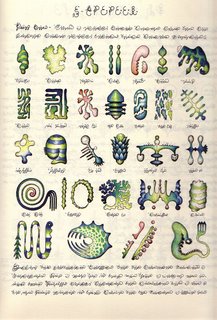

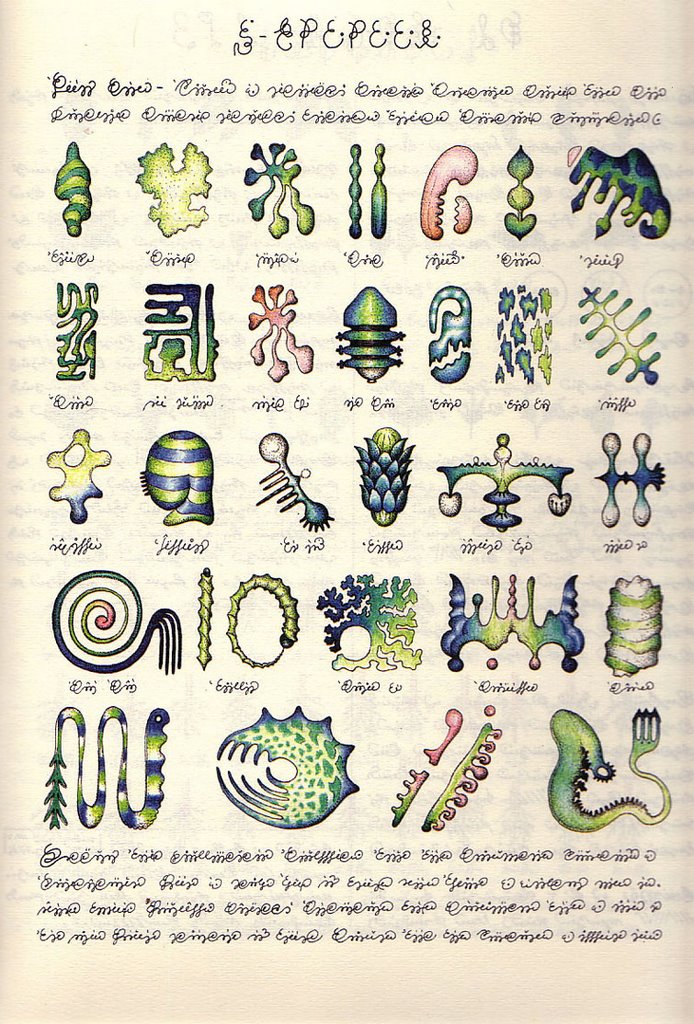
On really a rather unrelated note, if you ever chance upon a cheap copy of the otherwise pricey book, Codex Seraphinianus, buy it. I have a copy I got many years ago as a first American edition. A newer edition has a preface by Italo Calvino (read also Calvino's magnificent If On a Winter's Night, A Traveler and his Invisible Cities). The Codex is a masterpiece of creative madness - a creation of a non-existent language and world, detailing its people, flora, and fauna, its technologies, and its customs. Unfortunately, the book's cause has been taken up by occultists, thus bleeding some of the childlike life from it....How many countries are there in the world? The question is not as simple as it seems. The United Nations claims 191 members, the United States Department of State supposes 192 independent countries, while the C.I.A. World Factbook spreads its net even further by suggesting 268 nations, dependent areas, and other entities. But leaving aside whether territories or colonies such as Puerto Rico or Bermuda should be included (not to mention the political status of such “non-countries” as Palestine, Tibet, and Taiwan) there are a vast number of claims from other, less well-known nations asserting their independent status.
Call them micro-nations, model countries, ephemeral states, or new country projects, the world is surprisingly full of entities that display all the trappings of established independent states, yet garner none of the respect. The Republic of Counani, Furstentum Castellania, Palmyra, the Hutt River Province, and the Empire of Randania may sound fantastical, but they are a far cry from authorial inventions, like C.S. Lewis’s Narnia or Swift’s Laputa. For while uncertain territories like the Realm of Redonda might not be locatable in your atlas, they do claim a very genuine existence in reality, maintaining geographical boundaries, flaunting governmental structures, and displaying the ultimate necessity for any new nation: flags. Admittedly they may be little more than loose threads on the patchwork of nations, but these micro-nations offer their founders a much sought-after prize—sovereignty....

Black Georgetown
For those of you interested in Washington DC history outside of its monument valley Disneyworld, take a look at this piece in the Washington Post on the history of Georgetown. I don't live in Georgetown proper (can't come close to affording it, even if I wanted), but I live nearby. I've always liked that the eastern part of Georgetown still has several African-American churches that have remained part of family tradition since the days when eastern Georgetown was populated by slaves and former slaves.
Georgetown's African-American population was quite large at one point - over 3000 in 1870 - but eventually suffered through a series of economic shifts, natural disaster, poor urban policies, and racism. Note that even today the Metro doesn't run to Georgetown, a policy that was created out of previous Georgetown policies of segregation so that the "riffraff" of DC can't easily access Georgetown.
Georgetown's African-American population was quite large at one point - over 3000 in 1870 - but eventually suffered through a series of economic shifts, natural disaster, poor urban policies, and racism. Note that even today the Metro doesn't run to Georgetown, a policy that was created out of previous Georgetown policies of segregation so that the "riffraff" of DC can't easily access Georgetown.
Middle East scare-quotes
I've been wondering about the much-publicized Iranian and Syrian connections to Hezbollah's activities in Lebanon. Hezbollah captures two Israeli soldiers, and the US connects the action to Iran. Hezbollah manages to send a drone aircraft into an Israeli ship and Israel claims it couldn't have done it without Iranian help. Indeed, this is perhaps the sole claim that gives any legitimacy at all to Israel's bombing of Beirut, and this would still require that the Lebanese state had direct control over Hezbollah and that Hezbollah is indeed an Iranian agent. In the case of Syria, wasn't Syrian influence largely pushed out of Lebanon (which, incidentally, also brought Hezbollah into the government) at the constant urging of the US? How can the Lebanese, then, be attacked for the reason that Syria operates by proxy through the Lebanese state to control Hezbollah?
Is this all of the nature of the self-fulfilling prophecy? As Juan Cole says,
I simply urge caution in jumping to conclusions about:
1. How we characterize "terrorist." There's good reason to say that Israel's unprovoked attacks on civilian populations in Beirut are as terroristic as Hezbollah rockets falling in Israel. Or perhaps worse, given their deadliness and disproportionality.
2. The alleged connections between Iran, Syria, Hezbollah, and Hamas (and toss in al Qaeda in Iraq for the hell of it). There are, of course, common sympathies, but sympathies do not a casus belli make. The rest of our information is "top-secret." The US citizenry has pretty bad recent experience with trusting secrets maintained for reasons of "national security" and dribbled into the public sphere only as political opportunism allows. See: Iraq.
3. Rushing to war or allowing Israel to rush to war as a proxy. War will not solve anything, especially not in the Middle East. One commenter below suggests total submission of the anti-Israel population in the region. I cannot begin to count the ways in which this is overly-simplistic, ridiculous, and morally execrable. Troutsky has the appropriate response.
4. Allowing war to cloud perceptions of what the upcoming domestic elections are about. You can be played for the fool some of the time, but you can't be played for the fool all of the time (I sure as hell hope).
UPDATE:
See this blog published by a Swede who is thus far remaining behind in Beirut.
See also this clearinghouse for blogs on Lebanon: Open Lebanon.
See also this very interesting letter from an Israeli in Beirut in 3 Quarks Daily.
Is this all of the nature of the self-fulfilling prophecy? As Juan Cole says,
Israeli spokesmen are saying that they want to finish off Hizbullah. But you can't finish off a mass movement among 1.35 million people. Besides, there wouldn't be any Hizbullah if Israel had not invaded Lebanon in 1982 and occupied the south for 18 years. Israel's grabby occupation radicalized and helped mobilize the Lebanese Shiites. They aren't going to become less radical and less mobilized as a result of the current hamfisted Israeli assault...Israel and the US seem to be itching for a new world war or broader regional war. But when it comes to what we the public actually know, we're being led down the road of deceit (break out the "misleading" language) once again. This is an example of the kind of information we have to go on:
But even anti-Syrian, anti-Hizbullah cabinet members like Walid Jumblatt are blasting Israel's "brutal aggression."...
Some press reports suggest, moreover, that a lot of Lebanese, seeing their capital under attack from Israel, are rallying behind Hizbullah. Even many formerly pro-American Christian Lebanese are deeply upset that Bush seemed to say it was all right for the Israelis to bomb their civilian airport and blockade the whole country.
U.S. and Israeli officials have gone a step further, publicly charging -- without offering direct evidence -- that Iran and Syria had a hand in the operations. A senior U.S. official, who spoke on condition of anonymity, said the United States had intelligence that Hezbollah leader Hasan Nasrallah traveled from Beirut to Damascus to visit Hamas political chief Khaled Mashal shortly before Wednesday's Hezbollah raid, suggesting the operations were linked, the official said.Of course, I don't know any better than anyone else what the true links are between Iran, Syria, Hamas, and Hezbollah. All we truly have are claims made by political players and those with particular interests in portraying political affiliations in certain ways: that is, Israel and the US. Frankly, I don't trust anything these two administrations have to say.
I simply urge caution in jumping to conclusions about:
1. How we characterize "terrorist." There's good reason to say that Israel's unprovoked attacks on civilian populations in Beirut are as terroristic as Hezbollah rockets falling in Israel. Or perhaps worse, given their deadliness and disproportionality.
2. The alleged connections between Iran, Syria, Hezbollah, and Hamas (and toss in al Qaeda in Iraq for the hell of it). There are, of course, common sympathies, but sympathies do not a casus belli make. The rest of our information is "top-secret." The US citizenry has pretty bad recent experience with trusting secrets maintained for reasons of "national security" and dribbled into the public sphere only as political opportunism allows. See: Iraq.
3. Rushing to war or allowing Israel to rush to war as a proxy. War will not solve anything, especially not in the Middle East. One commenter below suggests total submission of the anti-Israel population in the region. I cannot begin to count the ways in which this is overly-simplistic, ridiculous, and morally execrable. Troutsky has the appropriate response.
4. Allowing war to cloud perceptions of what the upcoming domestic elections are about. You can be played for the fool some of the time, but you can't be played for the fool all of the time (I sure as hell hope).
UPDATE:
See this blog published by a Swede who is thus far remaining behind in Beirut.
See also this clearinghouse for blogs on Lebanon: Open Lebanon.
See also this very interesting letter from an Israeli in Beirut in 3 Quarks Daily.
Saturday, July 15, 2006
Unidentified fruit

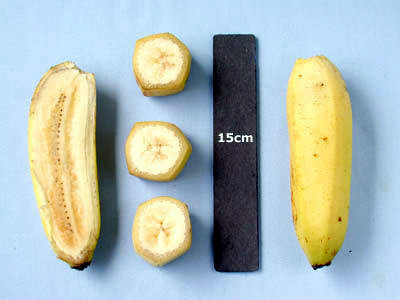
This one stumps Helmut. Any answers?
UPDATE:
MT, always on the ball, has tracked down two candidates: the potato tree and the sausage tree. I thought at first it might be the fruit of a sausage tree. I had seen these in East Africa and was told a local beer is made from them. But I remember them as more elongated. The potato tree, on the other hand, doesn't seem to have a lot of info out there. The photos MT has found look similar to sausage tree fruit. They both look roughly like the photo above. I know, I know,... we're blinding you with science. Science!
Freedom of speech and hate speech
I've been involved in debates, sometimes in comment strings around blogland, on the issue of free speech. These debates generally take the form of someone claiming in absolutist language that freedom of speech can never be abrogated or regulated in even highly qualified ways. The principle itself is sacred. I then make some argument about the limits to freedom of speech in the larger context of social responsibility and moral obligation. My claim is usually that there are situations in which it is perfectly justified to limit free speech, while acknowledging that this is always a political issue and can thus be abused. We have to be careful of the abuse of public speech from all directions, not merely authority. I'm usually accused (by absolutists!) of being "totalitarian." Their counterargument is generally a repeat of the quote attributed inaccurately to Voltaire that, "I may detest what you say, but I will defend to the death your right to say it." That's not an argument; that's an assertion that appeals to the philosophical authority of Voltaire. Assertions are fine by me, but without any argument to back them up, they fall apart, and thus become a means by which one person imposes his view on another. This is especially the case when the whiff of an argument is basically an appeal to authority, which is precisely what free-speechers supposedly do not want. This, I would think, is also contrary to the spirit, if not the letter, of the principle of free speech. It sure makes many civil libertarians look silly.
A fairly orthodox liberal philosopher I like quite a bit, Jeremy Waldron, writing in the London Review of Books, discusses the claims for and against regulating hate speech. We disagree about quite a bit, of course, but I find his discussion of free speech spot on. Take a look.
A fairly orthodox liberal philosopher I like quite a bit, Jeremy Waldron, writing in the London Review of Books, discusses the claims for and against regulating hate speech. We disagree about quite a bit, of course, but I find his discussion of free speech spot on. Take a look.
...I now live in the United States and teach at a law school. My colleagues are appalled when I tell them this story of the English racist sent to prison. This, they say, would never happen in America on account of the First Amendment, and it shouldn’t happen anywhere because free speech is a fundamental right. Recently, I have heard them voice similar views about the jailing in Austria of David Irving – the man who prided himself on having shaken more hands that shook hands with Hitler than anyone else in the world – for Holocaust denial. It seems that racists and Nazis are never far from the centre of concerns about free speech. In the US, First Amendment scholars point proudly to the famous intervention by the American Civil Liberties Union in 1977 to defend the right of National Socialist agitators, under the leadership of a man called Frank Collin, to march – swastikas flying – through a Jewish neighbourhood in Skokie, Illinois (a village just north of Chicago), where many Holocaust survivors lived.Faced with the prospect of a Nazi march, the Skokie village board had passed ordinances banning parades with military-style uniforms, banning the distribution of pamphlets promoting the hatred of any group in the community, and requiring a $350,000 indemnity bond to be posted in advance of any march. The ACLU challenged these measures on behalf of the Nazis, and the Court of Appeals for the 7th Circuit declared the ordinances unconstitutional on First Amendment grounds. (In the event, the Skokie march did not take place. Collin’s Nazis marched in Marquette Park in Chicago and it was there that they handed out pamphlets saying ‘Death to the Jews’. Collin abandoned National Socialism after spending time in prison in the 1980s for child molesting.)...
To begin with, the language attributed to Voltaire is bewildering. ‘Defend to the death your right to say it?’ Whose death? How would death be involved? I guess its most attractive meaning is something like: ‘I will fight and, if need be, lay down my life for a Bill of Rights that may have this implication.’ A more troubling reading, however, is that Nazi speech is worth protecting even if a consequence of that protection is that someone gets hurt or killed. ‘I will defend your right to say it, even if your saying it makes violence more likely against the people attacked in your pamphlets.’ Is that what is meant? Defenders of free speech squirm on this point. On the one hand, they want to say that we should be willing to brave death for the sake of this important individual right. On the other hand, they assure us dogmatically that there is no clear evidence of any causal connection between, say, racist posters and incidents of racial violence, between pamphlets that say ‘Hitler should have finished the job’ and anti-semitic attacks, or between pornography and violence against women. Indeed, they pretend to have no idea of what such a causal mechanism could possibly be: ‘We are defending only the Nazis’ speech. How on earth could there be any connection between what they say and the things that some violent individuals do?’
It’s a strange dichotomy because, in other contexts, American civil liberties scholars have no difficulty at all in seeing a connection between speech and the possibility of violence. They point to it all the time as a way of justifying restrictions on citizens’ interventions at political gatherings. If Donald Rumsfeld comes to give a speech and someone in the audience shouts out that he is a war criminal, the heckler is quickly and forcibly removed. When I came to America, I was amazed that nobody thought this was a violation of the First Amendment. (Shouting comments at public meetings was another of my favourite pastimes when I was young and irresponsible.) But I was told by my American colleagues that heckling presages disorder, and disorder threatens security. There is a time and place for heckling – usually several blocks away in a pen set up by the police to ‘accommodate’ legitimate protest, which no one except the police and the protestors themselves, certainly not Donald Rumsfeld, has any prospect of hearing. And that’s all the First Amendment requires. So there is an odd combination of tolerance for the most hateful speech imaginable, on the one hand, and obsequious deference, on the other, to the choreography which our rulers judge essential for their occasional public appearances. The Nazis can disrupt the streets of Skokie, but those who disrupt Rumsfeld’s message will be carried away with the hands of secret service agents clamped over their mouths. I have given up trying to make sense of any of this...
...["abyss-redemption"] is the boutique faith of a few liberals who take the resilience of their own voyeurism as a sign that speech is really harmless. If it signifies anything, what it signifies is that the costs of hate speech, such as they are, are not spread evenly across the community that is supposed to tolerate them. The Robert Relfs of the world may not harm the people who call for their toleration, but then few of them are depicted as animals in posters plastered around Leamington Spa. We should speak to those who are depicted in this way, or those whose suffering or whose parents’ suffering is mocked by Frank Collin and his Nazi colleagues, before we conclude that tolerating this sort of speech builds character.

Subscribe to:
Posts (Atom)