We may now announce with great alacrity that the Phronesisaical Institute for Predictive Science and Holiday-Making (PIPSH) has achieved rigorous scientific results using today's most advanced scientific instruments that correlate terrorist arrests with particular dates on the Gregorian calendar by multi-angulating the variables of lunar phases, the stars, gravity and dark matter, gravitas, and chutzpah.
Major terror arrests, we predict with near-absolute certainty, shall take place in October-November 2006 and October-November 2008.
As such, we further propose a new federal holiday - "Terror Day" (other recommendations for the name are welcomed) - to take place on or around the time of Halloween every two years. We suggest a parade sponsored by the Ministry of Silly Hats. We do not, however, wish to hinder these celebrations from being enjoyed at other times during the year: State of the Union address, major political scandals, massacres, economic downturns, are some suggested dates for less formal ceremonies.
Please help us celebrate this exciting new scientific discovery!
UPDATE:
Reader MH writes in with a suggestion for "Interrogators Appreciation Day" as another new national holiday, and suggests retailers start work on their best cookie bouquets.
Tuesday, August 22, 2006


Moscow bomb
While in the US, people struggle with all the potential swarth-fired terrorism lurking in the dark corners of American synapses, Moscow dealt with a reality-based bombing on Monday. The motivation is apparently yet again right-wing racism.
10 people, including five Chinese nationals and one Vietnamese, were killed in an attack on a Moscow market Monday, Russian officials said on Tuesday. Prosecutors said the two young suspects could belong to a racist group, Russian NTV television reported Tuesday morning.
The suspects are students at a Moscow university, a source at the prosecutor’s office told the RIA-Novosti news agency. The source went on to say that the young men had manufactured explosive devices themselves with the intent to blow up a multi-ethnic crowd of vendors at the market. At first both denied their alleged involvement but then agreed to testify.
Rumsfeld cannot go
According to Laura Rozen [via Raw Story], Bush has asked around about replacing Rumsfeld as Secretary of Defense. So far, rejection.
Garden of Phalluses
No, not the Bush administration, sillies. It's a real one, erected in South Korea. It is Love Land.
Now, I have seen the phallus festivals in Japan, marching the Giant Penis through the streets towards the female shrine, but I have never witnessed "...the nipple mountain crowned with pink nubs or the sturdy erect penises that rise up from the goldfish pond like a fountain."
If you visit Love Land, but do not have a date, do not dismay. There is also the "Masturbation Bike" (note the feathers).

Now, I have seen the phallus festivals in Japan, marching the Giant Penis through the streets towards the female shrine, but I have never witnessed "...the nipple mountain crowned with pink nubs or the sturdy erect penises that rise up from the goldfish pond like a fountain."
If you visit Love Land, but do not have a date, do not dismay. There is also the "Masturbation Bike" (note the feathers).

Monday, August 21, 2006

Basque cuisine
A Helpful Hint from the Homestyle Kitchen of Helmut: Basque food is delicious and impressive and often simple to make. Take the refinedness of French haute-cuisine, the freshness and earthiness of French and Spanish country cooking, the spices of Spanish cuisine, robust red wines, and throw in several dashes of originality, and you get Basque cuisine. I received a book some time ago by the California-based chef, Gerald Hirigoyen, titled The Basque Kitchen. I've made several dishes from it, experimented a bit with them, and have made very nice discoveries along the way.
It's also a cuisine that has politics. One, apparently, that seeks "a peace that is not as ephemeral as... red cabbage gelatin with liquefied chard."
Euskal Blog excerpts a rather ridiculous story from the LA Times that intertwines the politics and food of the Basque country (mostly the politics). Go for the food.
The Basque Country was always an incongruous place for revolution. Its gently rolling hills, quaint fishing villages and spectacular sea views belie deep-seated political and ethnic anger. It is one of Spain's most prosperous areas, a place of unique gourmet cuisine, but one where the intelligentsia need bodyguards, where bombs go off at universities, and where outlawed rebel partisans give news conferences in fashionable hotels...
Berasategui, a stocky man dressed in chef's whites, yearns for a peace that is not as ephemeral as his red cabbage gelatin with liquefied chard...
Berasategui and the other chefs were questioned in late 2004 by judicial officials in Madrid about whether they had paid ETA to leave their restaurants alone. Spanish authorities maintain that extortion was ETA's most lucrative source of income, along with kidnappings. Up to a billion dollars may have been collected over the years, used to finance attacks, support fugitives and aid prisoners...
"In the Basque Country, before we learn to walk, we learn to cook," he said, with a rare smile.
"We are a country with spark, living historic moments. If all sides would just leave us alone."
Pasolini or Gibson?
From 3 Quarks:
...The problem, though, is that when these rigorous demands [attempting to articulate the concept of God from a standpoint and language that is all-too-human] are pushed as far as they can go, and one by one all the features projected from human experience are stripped away, we find that not all that much is left, and the apophatic path leads us to something that looks troublingly like atheism. God is an old man on a throne or he is, quite literally, nothing...Consider in this connection the expression of the religious sentiment in art. Pier Paolo Pasolini, before he was murdered by an underage hustler he had unashamedly picked up in some back alley of Rome, managed to make one of the most beautiful pieces of religious art of the 20th century: his film rendition of The Gospel According to St. Matthew. The best religious art of the last 100 years was created by a homosexual communist.
Perhaps the worst religious art (using that term generously) of the same period was created by an aggressive and empty-souled goon with outsized daddy issues who, when on break from belching hatred, remains unable to shut up about his personal relationship with the divine. Rent his Passion of the Christ together with Pasolini's masterpiece sometime, and watch them back to back. Then ask yourself whose side you want to be on come Judgment Day.
"No soup for you"
This is one of those internetaciously neat things that is neat because it starts to look like reality rather than virtuality. Isn't that odd? It's on a par with how we anthropomorphize a pet's behavior: isn't it funny how the monkey smokes cigarettes?
Soundseeker is mapping sounds of New York City onto GoogleMaps. Neat. [via WFMU]. See also this one as well as the smell map. Randomly associating, see also Bullseye Rooster's global odors discussion and the punk band, The Swell Maps. The latter brings us to this band, The Barracudas, which links us right back here. And, thus, here. Look at the monkey act like a blogger.
Soundseeker is mapping sounds of New York City onto GoogleMaps. Neat. [via WFMU]. See also this one as well as the smell map. Randomly associating, see also Bullseye Rooster's global odors discussion and the punk band, The Swell Maps. The latter brings us to this band, The Barracudas, which links us right back here. And, thus, here. Look at the monkey act like a blogger.
Where next for US foreign policy?
I suppose this might be old stuff to many of you too - I'm still catching up with reading (all I really read in Honduras was Michael Frayn's interesting novel, Spies)....
Here is Stanley Hoffman in the NY Review of Books from a week or so ago writing about US foreign policy. It's worth reading. Skip past the book review part. Walt is interesting, but Fukuyama's recent work is an exercise in self-rehabilitation. I don't care enough about him as an individual to want to follow along. Hoffman is the interesting one here, so section 3 is most worth reading. He outlines what he thinks ought to be American foreign policy, and it doesn't look much like the Bush administration's. I think you'll also notice several of the themes we have nearly fetishized here.
Here is Stanley Hoffman in the NY Review of Books from a week or so ago writing about US foreign policy. It's worth reading. Skip past the book review part. Walt is interesting, but Fukuyama's recent work is an exercise in self-rehabilitation. I don't care enough about him as an individual to want to follow along. Hoffman is the interesting one here, so section 3 is most worth reading. He outlines what he thinks ought to be American foreign policy, and it doesn't look much like the Bush administration's. I think you'll also notice several of the themes we have nearly fetishized here.
Sunday, August 20, 2006
Country Roads of Death?
I don't know about the rest of you, but I've been on the edge of my seat since Friday, waiting for the second half of this story, in which a woman was detained in an airport in West Virginia after some of her cosmetics were mistaken for explosives. Would a terror cell be exposed? Had al-Qaeda finally made it to the Blue Ridge?
Sadly, it was makeup. Even more sadlier, I had to work to learn that. No problem finding out about the potential explosives. But everybody seemed only too happy to let that lingering fear hover there.
But here was the best part of the story, or, I mean, the "really important" part:
More importantly: even in West Virginia? Hey, asshole, you want a backwater to showcase your achievements? How about New Orleans? Leave the Mountain State out if it, you cocksucking failure.
Barba de Chiva feels a little bit better, now.
Sadly, it was makeup. Even more sadlier, I had to work to learn that. No problem finding out about the potential explosives. But everybody seemed only too happy to let that lingering fear hover there.
But here was the best part of the story, or, I mean, the "really important" part:
"The story here, though, that is really important," Mr. Chertoff said, "is the system worked even at a regional airport in West Virginia."No: fuck you, Chertoff. How--how?--is this an example of the system "working"?
More importantly: even in West Virginia? Hey, asshole, you want a backwater to showcase your achievements? How about New Orleans? Leave the Mountain State out if it, you cocksucking failure.
Barba de Chiva feels a little bit better, now.
Barbara Feldon Sings

Quick, while the .mp3 file is still accessible, run over to Dans Mon Café and download Barbara Feldon (Agent 99, Get Smart!), one of Helmut's first true loves, singing "99."
The Bush Administration: Comedy Gold
Frank Rich helps us pronounce the Reign of Terror to be over.
UPDATE:
Here's the full Rich article (at the indispensable Wealthy Frenchman) for those of you without the NY Times subscription.
It's not as if the White House didn't pull out all the stops to milk the terror plot to further its politics of fear. One self-congratulatory presidential photo op was held at the National Counterterrorism Center, a dead ringer for the set in "24." But Bush's Jack Bauer is no more persuasive than his Tom Cruise of "Top Gun." By crying wolf about terrorism way too often, usually when a distraction is needed from bad news in Iraq, he and his administration have long since become comedy fodder, and not just on "The Daily Show." June's scenario was particularly choice: As Baghdad imploded, Alberto Gonzales breathlessly unmasked a Miami terror cell plotting a "full ground war" and the destruction of the Sears Tower, even though the alleged cell had no concrete plans, no contacts with terrorist networks and no equipment, including boots.Look, there simply comes a time when the administration boosters are no longer worth dealing with. I think this threshold was crossed several years ago. But others have continued to talk about the Malkins, Coulters, O'Reillys, the Rumsfelds, Cheneys, and Bushs as if what they say is significant in some greater war for the truth. They've lost. And you now have to be a complete bozo to hang on to whatever these utter brainturds have to say. It's over. To know that it's over takes only a wee bit of investigation now - or simply paying attention - a bit of common sense, and a bit of an aversion to living your life according to the caprices of authoritarian propaganda. Time to take our laxatives. There is nothing more for these people to say.
UPDATE:
Here's the full Rich article (at the indispensable Wealthy Frenchman) for those of you without the NY Times subscription.
Saturday, August 19, 2006

Jobs in France
Sitting in the Miami airport a week ago waiting on my flight, I saw CNN on the tv. I couldn't hear the sound of the panelists discussing something or another; I could only see the images. Try this some time and see what kind of message you take from the images without the overlaid discussion. The images in this case ran roughly like this: first, a shot of the Statue of Liberty, then another patriotic shot that tied Lady Liberty to the 9-11 bombings. Next, there was an image of Jacques Chirac. A following sequence of juxtaposed images showed the Eiffel Tower (we're in France), last fall's riots in the Paris suburbs, Al Gore (?!), a Nazi symbol, and chaos in Iraq.
Now, it depends, of course, on how these images are strung together by a verbal narrative. But somehow I doubt the narrative said that Al Gore and the French were attempting to defend our freedoms by opposing the war in Iraq.
France, in the US media, is equated with socioeconomic ennui, anti-Americanism, anti-Semitism, anti-Islam, arrogance, a bloated social system and sluggish economy, and general intransigence. Move farther to the right in the media, and you find the most offensive of stereotypes (unwashed and smelly, cowardly, "Sacre Bleu!"-saying, "cheese-eating surrender monkeys"). I had an email exchange with former Reagan speechwriter, John Podhoretz, over a month ago in which I questioned unsupported statements he made about supposed French anti-Semitism and compared anti-Semitic attacks in France to those in the US. There are more in the US by a factor of nearly 8. The population of the US is greater than France's by roughly a factor of 4.5, which means more attacks per capita. But we don't call the US anti-Semitic for the most part. Podhoretz responded by calling me a "preposterous fool," "Foucault" (to which, at this point in the heated exchange, I unfortunately responded by calling him "Beavis"), and told me to go back to my "environmental bullshit." He didn't respond to the questions I raised, but immediately went for the ad hominem. I take this as par for the course, even from a Reagan speechwriter, when it comes to France. Helmette, who is French, and I have put up with the nastiness since 9-11 - some of it coming from my own family, and even living in liberal Washington, DC. Like Podhoretz's response, this nastiness doesn't seek to respond to criticism but simply to disparage.
Somehow it has become acceptable in the mainstream to say the very worst vituperative things about France, things that would be considered racist, ethnicist, or otherwise bigoted if applied to anyone else. For some reason, it is normal to disparage France in this way, and this is embedded within the mainstream media as well. I mostly see it as a product of the general political climate of critics of the Bush administration being cowed and threatened.
At any rate, lookee here. New job news from France.
The French economy, the third-largest in Europe, is suddenly creating jobs at its fastest pace in five years and starting to enjoy the mild upturn that may be starting to take root across the region. Europe, and in particular those countries that use the euro, has been plagued by paltry growth rates in recent years, during a time when the global economy has been expanding at its fastest pace since the early 1970s. But the last week or so has brought a raft of good news. France, until recently missing from the broader picture of improvement, last week registered a sharp gain in economic growth in the second quarter of as much as 1.2 percent, its strongest in almost six years. At the same time, the French unemployment rate has fallen to 9 percent, its lowest level in four years and down sharply from the five-year high of 10.2 percent in May 2005.And this too:
If members of ethnic minorities have long been present on French construction sites and factory floors, they are still a rare sight in management positions and higher-profile jobs that routinely bring them into contact with customers. But now something is happening in the whitest of white-collar sectors: the largest banks and insurers in France appear to be spearheading efforts in the country to diversify their work forces by tapping into a growing pool of educated second-generation immigrants. Outreach programs in the French financial sector have quietly multiplied in recent years, but three weeks of rioting in immigrant suburbs last autumn abruptly propelled them into the spotlight, giving them a heightened significance.
Normal
The release of the statement was apparently intended to explain why it took so long to report the Haditha massacre (and we'll call it that, okay? Kids were shot in the back of the head.). One of the oddest things is that nobody anywhere in any of these proceedings seems to have any remorse about the killings. It's clinical. It's pathological.The Marine officer who commanded the battalion involved in the Haditha killings last November did not consider the deaths of 24 Iraqis, many of them women and children, unusual and did not initiate an inquiry, according to a sworn statement he gave to military investigators in March.
"I thought it was very sad, very unfortunate, but at the time, I did not suspect any wrongdoing from my Marines," Lt. Col. Jeffrey R. Chessani, commander of the 3rd Battalion of the 1st Marines, said in the statement.
Friday, August 18, 2006
Friday dinner party conversation stopper
"The learning nervous system is a deterministic system with a relativistic self-regulating organization that defines its domain of interactions in terms of the states of neuronal activity that it maintains constant, both internally and at its sensory surfaces, and that specifies these states at any moment through its functioning, and through the learning (historical transformation) itself. Consequently, it must be able to undergo a continuous transformation, both in the states it maintains constant, and in the way it attains them, so that every interaction in which new classes of concomitances occur effectively modifies it (learning curves) in one direction or the other. Since this transformation must occur as a continuous process of becoming without the previous specification of an end state, the final specification and optimization of a new behavior can only arise through the cumulative effect of many equally directed interactions, each of which selects, from the domain of structural changes possible to the nervous system in its structural dynamism, that which at that moment is congruent with its continued operation subservient to the basic circularity of the organism. Otherwise the organism disintegrates."
Humberto Maturana and Francisco Varela, Autopoiesis and Cognition.
Humberto Maturana and Francisco Varela, Autopoiesis and Cognition.
Pitchfork's 200 greatest songs of the 1960s

A change of pace, and back to music for a moment. Today, Pitchfork wraps up their list of the 200 Greatest Songs of the 1960s. The Beach Boys' "God Only Knows" comes in at Number 1. I'm glad to see that Iggy and the Stooges' "I Wanna Be Your Dog" made the top 20, and Sam Cooke's "A Change Is Gonna Come" ranked third. I'm also glad to see The Ronettes' "Be My Baby" up there. Very different songs, but all masterpieces. Check out the list, let me know what you think.
Oh, and speaking of somewhat embarrassing tastes below (and I've expressed my love for Pilot, which is another embarrassing one, but also the hipsterly acceptable Robert Pete Williams, and many others here and here), I'm now really into... Lily Allen. 20 years old. There, I've admitted it. The Pilot days wash over me again and the metalheads beat me up behind the bleachers. Make of it what you will, but first do me a favor and listen to the eminently catchy tunes, "LDN" and "Smile." I know this will come back to haunt me like my Spice Girls global groupie days or my early years buying beers at 7-11 for the Backstreet Boys.

Horrors Never Ceasing
Over the last six years in Bizzaro World, I've found myself missing the mind of Ronald Reagan. I've pined for Henry Kissinger's wisdom. I've even thought, "why, oh why, couldn't the nation have chosen somebody as respectful of our Constitution as Richard Nixon?" But today something happened that was so strange, so unbelievable, so unthinkable that, well, I'd never thought of it. Unimaginable, inconceivable, that's what it was. Not in even in bad trips or malarial fever nightmares would I ever have come up with this, but it happened, it's true and it's real:
I missed Dan Quayle as Vice President.
I missed Dan Quayle as Vice President.
Thursday, August 17, 2006

Bomb-plot skepticism
Rodger Payne at Duck of Minerva leads us to this interesting blog post by the former UK ambassador to Uzbekistan, Craig Murray.
...this, I believe, is the true story.As always, it is worth being very critical in one's acceptance of claims about terrorism made by the US and UK governments (or anyone, including Murray). This has nothing to do with conspiratorial thinking; it has to do with precedent. When you're sold a supposedly fresh bill of goods that proves repeatedly rotten and you continue to buy, your actions are providing an instance of the meaning of stupidity.
None of the alleged terrorists had made a bomb. None had bought a plane ticket. Many did not even have passports, which given the efficiency of the UK Passport Agency would mean they couldn't be a plane bomber for quite some time...
As they were all under surveillance, and certainly would have been on airport watch lists, there could have been little danger in letting them proceed closer to maturity - that is certainly what we would have done with the IRA...
In all of this, the one thing of which I am certain is that the timing is deeply political. This is more propaganda than plot. Of the over one thousand British Muslims arrested under anti-terrorist legislation, only twelve per cent are ever charged with anything. That is simply harrassment of Muslims on an appalling scale. Of those charged, 80% are acquitted. Most of the very few - just over two per cent of arrests - who are convicted, are not convicted of anything to do terrorism, but of some minor offence the Police happened upon while trawling through the wreck of the lives they had shattered.
Sufficient Reason
I usually look for some novel texts to use for my classes in addition to texts I think every grad student ought to know. Reading this book today, I decided that this brief Peircean passage is going to form the basis for discussion for the first day in my Moral Dimensions of Public Policy (Normative Analysis) seminar this Fall. It's the Prelude to Daniel Bromley's terrific new book, Sufficient Reason: Volitional Pragmatism and the Meaning of Economic Institutions (Princeton UP), which we're reading in full a bit later in the semester.
"It may be supposed that the most fundamental of human needs concerns food, water, and staying warm. This supposition would be mistaken. The most fundamental human need concerns what to believe. Believing is precedential to eating and drinking (and staying warm) for the simple reason that even the seemingly basic acts of eating and drinking require a concept about surviving and thereby experiencing the future. This attribution of value to the future is what renders survival a conceptual rather than a physical matter. Without the idea of the future, and without the attribution of value to the future, eating is not an obvious or compelling activity. Eating requires the will to live.
With the future driving actions in the present, believing becomes the predicate for all action. What should I eat? What should I drink? How might I stay warm? From this one may further suppose that believing is an individual enterprise. This supposition, too, would be mistaken.
As social beings, we tend toward - indeed, we are defined by - social beliefs. The essence of socialization is precisely the stabilization of beliefs. And stabilized beliefs define for us what is normal, natural, correct, right. It could not be otherwise.
And from this spare beginning, one can begin to make out the ground beneath the social arrangements - the institutions - that define our very being as social creatures."
Created in Squid's Image
The first ever deep-sea video captured of a free swimming giant squid has led some Japanese academians to proclaim the elusive creature as a sentient divine being who "created Man and the Universe".And that's certainly one up on the Judeo-Christian god.
This seemingly fantastic notion has not yet been addressed, let alone accepted, by main-stream theologians, still tussling between the sharply contrasting Hindu belief that the Universe arose from a cosmic egg, that God lived within this cosmic egg, and upon agitating it, the egg was cracked open and creation began, and the African Boshongu belief that in the primordial beginning there was only darkness, water, and the great god Bumba, who in pain from a stomach ache, vomited up the sun and earth.
Other creation myths currently being considered for validity include the Aztec belief that Tezcatlipoca the Jaguar made himself into the sun, but was knocked into the ocean by Quetzalcoatl and the Mongol belief a goldeneye duck plucked mud from the bottom of an ocean covered earth and created inhabitable land.
Professor Yoshiro Yamato of the University of Nagoya scoffed at such absurdly quaint and primitive allegorical creation myths, claiming the divinity of giant squid is far more tangible and concrete, citing, "After all, we do have it on tape and at least you can see it."
UPDATE:
For you visiting Pharyngulists, please take a look around Phronesisaical and come back and see us again. It's not biology we discuss most of the time, but we take evolutionary theory to an entirely different plane and apply it to pretty much everything else.
Oh, and comments are more than welcome.
UPDATE:
While we're at it, here's some news on the Mongolian Death Worm.
The world we live in today
The woman was carrying hand cream and matches but was not a terrorist threat, said Christopher White, a Transportation Security Administration spokesman.
Wednesday, August 16, 2006
First rock concert
Play along, will you? Blue Girl has inspired me to ask: what was your first rock concert? Blue Girl's was Peter Frampton.
I saw Smokey Robinson and the Miracles first, I believe. But that was as a very young kid at Disneyland with my parents and cousins. It doesn't count. My very first genuine rock concert was... Steve Miller's Fly Like an Eagle tour, San Diego. I was a young lad, but I went with a friend and his older brother and without mom and dad. And everyone there was smoking the marihuana!
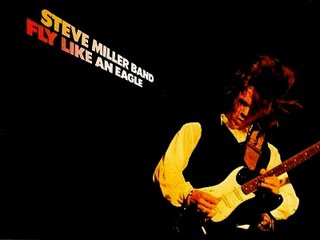
I saw Smokey Robinson and the Miracles first, I believe. But that was as a very young kid at Disneyland with my parents and cousins. It doesn't count. My very first genuine rock concert was... Steve Miller's Fly Like an Eagle tour, San Diego. I was a young lad, but I went with a friend and his older brother and without mom and dad. And everyone there was smoking the marihuana!


America the Toxoplasmic
We at Phronesisaical have previously discussed my favorite parasite, the toxoplasma gondii. We have operated under the assumption, however, that toxoplasma does wacky things to rats and mosquitoes, and we neglected human beings in the discussion. I was wrong and am now prepared to welcome toxoplasma to the human body. And yet, I feel rather uncertain and guilty.
Approximately one-quarter of Americans host a parasite that has been shown to affect personality in both rodents and humans. According to a recent study, this single-celled organism may be able to shape entire cultures.
In a paper published in the online edition of Proceedings of the Royal Society, United States Geological Survey researcher Kevin Lafferty argues that a significant factor in why some countries exhibit higher levels of neuroticism than others may be the prevalence of the parasite Toxoplasma gondii. The study also indicates that it may influence a society's preference for strict laws, an expression of uncertainty avoidance, and its valuation of 'masculine' priorities such as competitiveness and financial success over 'feminine' values like relationship-building.
"Toxoplasma appears to explain 30% of the variation in neuroticism among countries, 15% of the uncertainty avoidance among Western nations and 30% of the sex role differences among Western nations," Lafferty said via e-mail...
Lafferty based his analysis on earlier research by Jaroslav Flegr, a parasitologist at Prague's Charles University, which showed that in humans, Toxoplasma infection correlates highly with certain personality traits: Infected men tended to have lower levels of intelligence, superego strength and novelty-seeking, while infected women exhibited higher levels of intelligence, superego strength and warmth. Infected people of both sexes tend to be susceptible to feelings of guilt.
Fighting for the right to harass
Georgia Tech settles lawsuit by Republican group to harass others. With limitations on harassment, how is a Republican to communicate? From Inside Higher Ed:
Two officers of the campus’s College Republican group sued Georgia Tech in March, saying that officials at the public institution had impaired the students’ free speech rights by shutting down their “affirmative action” bake sale and by limiting their efforts to protest against “The Vagina Monologues,” among other things. The Alliance Defense Fund, a legal advocacy group that represented the students, argued in its complaint in Sklar v. Clough that Georgia Tech officials had based their actions against the students on the institute’s residence hall policies, which defined a series of “acts of intolerance” that were banned under the policy.
Most objectionable to the student plaintiffs were provisions in the policy that restricted “any attempt to injure, harm, malign or harass a person because of race, religious belief, color, sexual/affectional orientation,” and any “denigrating written/verbal communication ... directed toward an individual because of their characteristics or beliefs.” The lawsuit defined those provisions as overbroad and “draconian.”

Casting stones
The blabosphere is chattering about why vastly superior military power isn't reaping much in the way of victories these days. While pundits are focused on Israel's war on Lebanon, Iraq and even Afghanistan are failures from the point of view of the Goliath. The ostensive enemies in these cases end up looking like Davids. And everyone loves the rock-slinging David who fells the giant with a simple stone. The giants haven't fallen, yet, but they're waging wars that could end up with David simply keeping his stand while Goliath trips over a stone.
So goes the misplaced fetish for security by way of domination. If you've been following Phronesisaical, you know that we here place a heavy emphasis on legitimacy in international affairs. Not legitimacy of the old-timey realist stripe. But realists do have this one point right: as Henry Kissinger wrote, "legitimizing principles triumph by being taken for granted." A central problem in Lebanon, Iraq, and Afghanistan is that the flimsy excuses for war and destruction have shifted uncertainly in the winds of various military contingencies. Nobody really knows why Iraq and why Lebanon except, presumably, the leaders of the US and Israel and their cronies. As Martha Finnemore writes, "the goal being pursued by force must be seen as legitimate, and force must be viewed as a legitimate means to that goal." Simple, and true.
Legitimacy of an international cause may indeed be based entirely in self-interest but it must at least resonate with those one seeks to convince and those one seeks to defeat. Indeed, defeat itself requires that the enemy views himself as having lost. A historically significant defeat requires that the enemy views himself as having lost to a more compelling entity or set of principles. These have to be compelling for reasons having nothing to do with military force and domination. They have to be compelling by the force of their sense of justice or equity. Given that neither Iraq nor the US have offered up, or can offer, such legitimizing principles for their disastrous escapades, it is they who have lost. David - a compelling figure - defeats Goliath.
Americans fear "death and taxes." Wait, that's too cavalier (journalese). Americans, entranced by latest nightly news cholesterol-to-egg reports, fear death and they fear the loss of economic security or, rather, the kind of economic security that sustains over-inflated lifestyles. Christian Americans have their Heaven, but there's good reason to fear rejection at the pearly gates, what with 50% of Christian men addicted to porn. The ostensive enemy in the US's wars does not fear death and there's very little in the way of economic comfort to lose. What they fear is the loss of courage and the loss of innocent family. These are compelling reasons to fight. The US's and Israel's self-assuredness in their respective causes has led them towards unquestioned absolutism about their destinies. Worse, it has led them to presume that some settled legitimacy to their vaunted guiding principles is enough reason to behave in even the most execrable ways in the international sphere. The problem - as any Philosophy 101 professor knows - is that it's increasingly difficult to articulate just what these guiding principles and values are without resorting to platitudes. The US president certainly can't do it. He resorts simply to a grade-school "freedom" without giving any concreteness at all to that highly abstract and otherwise vapid notion. Legitimacy, on the other hand, isn't static - it is fluid and evolving and has to be won over and over through dialogue and international behavior and standards worth emulating.
As a military matter, however, I want to make one main point here. That is, the US and Israel have constructed a massive war apparatus - the largest by far in the world - as well as a philosophical conception of military and economic might that premises the ongoing buildup. That conception is that victories and security and values/principles are secured by military domination. You cannot, however, create such an apparatus and such a conception of the very nature of war without, yes, legitimizing principles, but also without any framework through which the ostensive enemy might see itself as having lost. The US fears losing where losing is framed in terms of death and economic status. Its war machine reflects these fears. The ostensive enemy does not have such fears. Indeed, it thrives and grows in the legitimacy of its causes and values with each death and each destruction of material wealth.
This is all not merely a strategic or tactical matter. The question is more far-ranging, I believe. It runs to the very heart of global power. That is, is the very conception of war, of the war apparatus, of the war economy, and of legitimate uses of military (and economic) power shared by the Americans and Israelis the core of Goliath's downfall?

Jimmy Carter interview in Spiegel
Carter: The fundamentalists believe they have a unique relationship with God, and that they and their ideas are God's ideas and God's premises on the particular issue. Therefore, by definition since they are speaking for God anyone who disagrees with them is inherently wrong. And the next step is: Those who disagree with them are inherently inferior, and in extreme cases -- as is the case with some fundamentalists around the world -- it makes your opponents sub-humans, so that their lives are not significant. Another thing is that a fundamentalist can't bring himself or herself to negotiate with people who disagree with them because the negotiating process itself is an indication of implied equality. And so this administration, for instance, has a policy of just refusing to talk to someone who is in strong disagreement with them -- which is also a radical departure from past history. So these are the kinds of things that cause me concern. And, of course, fundamentalists don't believe they can make mistakes, so when we permit the torture of prisoners in Guantanamo or Abu Ghraib, it's just impossible for a fundamentalist to admit that a mistake was made.Check out the rest.
Tuesday, August 15, 2006
Hot Man and Dr. Boney
I happen to be a big fan, vicariously, of Neal Pollack's kid Elijah. I mean, check this out:
"I am Hot Man! And you are Dr. Boney! And then I turn into Batman and Remote Control Man and I freeze you with my invisible power! You will fall on the Floor Of Dust and the mosquitoes will come and bite you. You can never defeat me!"
Tube Solid State Digital
Bobby Lightfoot investigates paradigms of technological innovation and comes up with very interesting scientific results. See here.
Make sure, also, to participate in Th' Bobby Lightfoot Memorial Political Activism Knowledge Repository.
Make sure, also, to participate in Th' Bobby Lightfoot Memorial Political Activism Knowledge Repository.

In the end, what?
The war on terror, gently out of time....
Robert Fisk:
Robert Fisk:
You have to be down here with the Hizbollah amid this terrifying destruction - way south of the Litani river, in the territory from which Israel once vowed to expel them - to realise the nature of the past month of war and of its enormous political significance to the Middle East. Israel's mighty army has already retreated from the neighbouring village of Ghandoutiya after losing 40 men in just over 36 hours of fighting. It has not even managed to penetrate the smashed town of Khiam where the Hizbollah were celebrating yesterday afternoon. In Srifa, I stood with Hizbollah men looking at the empty roads to the south and could see all the way to Israel and the settlement of Mizgav Am on the other side of the frontier. This is not the way the war was supposed to have ended for Israel.
Far from humiliating Iran and Syria - which was the Israeli-American plan - these two supposedly pariah states have been left untouched and the Hizbollah's reputation lionised across the Arab world. The "opportunity" which President George Bush and his Secretary of State, Condoleezza Rice, apparently saw in the Lebanon war has turned out to be an opportunity for America's enemies to show the weakness of Israel's army.
They were not there
Via Andrew Sullivan:
"There were other (U.S.) government agencies who would come into the prison and handle prisoners. I can't say which agencies, but you can probably guess. One night, this Black Hawk landed at about 4 a.m., and a couple guys came in with a prisoner and took him to tier 1, put sheets up so that nobody could see, and spent the rest of the night in there. They told us to stay away, so we did. Then a couple hours later, they came back out. They were like, "The prisoner is dead." They asked for ice to pack him, and then they said, "You guys clean this up. We weren't here. Have a good day.' Got back on the bird and took off, left the dead body right there. Those guys can come in and kill a guy, and there's nothing you can do. There's no record of them. They were never there. They don't exist," - Joe Darby, the soldier who blew the whistle on Abu Ghraib, in this month's GQ.
George Allen, Cracker
In news closer to home, Sen. George Allen of Virginia called the lone dark-skinned person in the crowd a "macaca" while campaigning. I know what a macaque is, but I'd never heard of calling a person a "macaca." I investigated half-heartedly and came up with this better investigation. It turns out that "macaca" is white supremacist language. Huh.
UPDATE:
Wolcott:
It has all been one big misunderstanding. He actually might have said "Mohawk," welcoming the Mohawk to America. Some theories suggest he might have said "macchiato." Perhaps even "muchacho." Perchance "Mankato"? "Margarita"? "Magnifico"? "Maharaja"? "Mahatma"? "Machinery"? "Magnanimity"? "Mackintosh"? "Macedonian"? "Macarena"? "Macrame"? "Macbeth"? "Macaroni"? "Metallica"?
UPDATE:
Wolcott:
UPDATE (16 August):Conservative New York radio talkshow hothead Bob Grant once said on the air that then-New York mayor David Dinkins (a far more elegant dresser than Grant, by the way) reminded him of a "men's room attendant".
On Imus in the Morning, Imus or one of his crew once joked about the pre-Washington Week in Review Gwen Ifill: "Speaking of reporter Gwen Ifill, he's said, 'Isn't the [New York] Times wonderful? It lets the cleaning lady cover the White House.'"
A week ago, Mickey Kaus's arm candy wrote, "Congresswoman Maxine Waters had parachuted into Connecticut earlier in the week to campaign against [Sen. Joseph I.] Lieberman because he once expressed reservations about affirmative action, without which she would not have a job that didn't involve wearing a paper hat."
And now the cover of the latest Weekly Standard brings us Al Sharpton as a Driving Miss Daisy faithful retainer "who dares not look his master in the eye."
Washroom attendant. Cleaning lady. Cafeteria worker. Chauffeur.
Notice a pattern?
It has all been one big misunderstanding. He actually might have said "Mohawk," welcoming the Mohawk to America. Some theories suggest he might have said "macchiato." Perhaps even "muchacho." Perchance "Mankato"? "Margarita"? "Magnifico"? "Maharaja"? "Mahatma"? "Machinery"? "Magnanimity"? "Mackintosh"? "Macedonian"? "Macarena"? "Macrame"? "Macbeth"? "Macaroni"? "Metallica"?

Fukuyama on Chávez
I'm a bit slow on the news. This article by Francis Fukuyama appeared in Saturday's Washington Post. The basic claim is that Chávez is an anachronism whose oil wealth allows him to conceal Venezuela's backwardness through the boosting of social and education programs that garner populist support. In the meantime, Chávez toodles around the globe talking to various leaders - especially those who irk the US - and consolidating his position as a geopolitically significant figure. Fukuyama sees Chávez 's Venezuela as neglecting the development of a position in the global economy and thus dooming the country to a sad fate if oil revenues plummet.
Granted that this is an opinion piece in the Post, rather than a scholarly analysis. However, like most assessments of Venezuela from an American point of view, there's much left wanting. What, precisely, is the problem with Chávez for Fukuyama? Let's quote him.
First, it's unclear how oil wealth equals taking control of the congress, etc. The state oil company, perhaps, but that's a tautaology - oil wealth enabled him to take over oil wealth? Come on, Francis. Chávez nationalized the oil industry in order to rewrite non-exploitative contracts with the major oil companies operating in Venezuela. For sure, this move gave Chávez great power on the global scene, and Chávez does seem to love his power. But the multinationals operating in Venezuela mostly agreed to the new terms - it was still worth it to do business. Now, if one is an economic partisan of Fukuyama's stripe, one says to oneself that willingness to pay determines price, including within the terms of contracts. If Chávez can rewrite contracts and oil companies will sign them, doesn't this suggest that previous contracts were heavily weighted against the interests of Venezuela? Yes, oil is special. But that doesn't mean it ought to be given away.
Second, as for "controlling congress," etc., this is a more complicated history. The Venezuelan opposition has boycotted one election after another. This has led to the near-total absence of opposition members in congress, especially since the December 2005 elections. Oil has nothing to do with it. It is a strategy of the opposition in order to place Chávez in a position of dictatorship in order to prove the point. Granted, Chávez doesn't mind. But the common theme on the US side is the Chavista power-grab. Facts are more complex. It is true that Chávez has far too much power, and the Bolivarian constitution is a mess. Nevertheless, one could easily make the case that the opposition is as responsible if not more so for the current situation in Venezuela as Chávez. A level-headed assessment of Venezuela simply has to come to terms with this. Fukuyama uses ostensibly level-headed language to cloak what is basically an uneducated political position... or worse.
Further, the executive nominates the judicial in Venezuela, as it does in the US. Chávez has also done so. Check every other case. Fukuyama is simply repeating the mantra that has gotten the US into trouble elsewhere: build up the dictator so that he requires toppling.
Fukuyama also mentions a "relatively free press." The press is largely opposition, and much of the political power of the opposition is represented and activated in the opposition press. I gave an interview in November to the largest of these newspapers on the nature of global economics and politics in which I was critical of status quo liberalization (as I am also of state-run economies) on environmental grounds. The paper refused to print the interview. And it was a damn good one, if I say so myself.
In other words, Fukuyama is simply lazily repeating the same old story about Venezuela. He gets a couple of things right. First, Chávez's policies are in many ways a continuation of previous Venezuelan governments' policies. Both have relied heavily on oil revenues. Whereas previous governments, however, allowed the poverty rate in an otherwise wealthy nation to rise to 50% with almost zero social and educational infrastructure to help alleviate poverty, Chávez has renegotiated the terms of that oil wealth to divert it into school and health clinic programs as well as construction of thousands of homes for the poor. Corruption remains rampant, yes. It's as bad as pre-Chávez decades. But there is significant assistance going to half of the Venezuelan population now. Beyond this, talk to members of the government - they'll say that the Chávez government is not anti-capitalist. Given the historical rape of Latin America, they're seeking fair terms of trade and an economy based on equity and social justice. Look at the new centers in the poor ranchos - job programs are not simply welfare programs, but skills training programs intended to wean local factories from initial state support. Whether they'll be successful or not remains to be seen. The point is that this is not simply a burgeoning welfare state.
Critics say the clinics and food programs and new housing is all about "consolidating the base." Depends on your outlook. I've seen firsthand the successes of education reforms, the new clinics, food programs, and construction. It can be done better, but this is already far better than pre-Chávez governments. Venezuela needs a reconciliation between the Chavistas and the well-educated and relatively wealthy opposition. There's talk of this in quiet circles, but such a reconciliation is not in the interests of many in the opposition, US interests, and the version of Chávez as power-hungry. A reconciliation could serve ultimately to build better clinics and housing projects, a better and more diverse domestic and global economy, and better technological development. As it is, the country is truncated, domestically antagonistic. Black-or-white commentators like Fukuyama get this all wrong. Venezuela can seek a novel route, and the Chavistas are as important a part of this route as rentist opposition members.
The final word on Fukuyama's piece is that it's useless. As scholars are wont to do, he coins the catchy term "postmodern authoritarianism" (which I think applies to the current US administration more than anything) without defining it. Let it seep in, package it with one-sided perspectives, and repeat a few clichés... like the collapsed bridge as a symbol of Chávez's reign. The bridge had been a mess before Chávez ever came to power. He should have done something about it, but so should have others.
Granted that this is an opinion piece in the Post, rather than a scholarly analysis. However, like most assessments of Venezuela from an American point of view, there's much left wanting. What, precisely, is the problem with Chávez for Fukuyama? Let's quote him.
Early on in Hugo Chávez's political career, the Venezuelan president attacked my notion that liberal democracy together with a market economy represents the ultimate evolutionary direction for modern societies -- the "end of history." When asked what lay beyond the end of history, he offered a one-word reply: "Chavismo."... The idea that contemporary Venezuela represents a social model superior to liberal democracy is absurd.OK, one ego against another. But let's see if there's any substance to Fukuyama's claim. Here's what he offers:
In his eight years as president, Chávez has capitalized on his country's oil wealth to take control of congress, the courts, trade unions, electoral commissions and the state oil company. Proposed legislation that would limit foreign funding could soon constrain nongovernmental organizations as well. And people who signed a recall petition against Chávez in the run-up to a 2004 referendum on his rule later found their names posted on the Web site of a pro-Chávez legislator; if they worked for the government or wanted to do business with it, they were out of a job and out of luck.I'm not sure how Fukuyama comes to any position of authority on Venezuela, but the above certainly doesn't inspire confidence. It's the standard line taken against Chávez. And it includes that neat little neocon twist so beloved by the propaganda wing.
First, it's unclear how oil wealth equals taking control of the congress, etc. The state oil company, perhaps, but that's a tautaology - oil wealth enabled him to take over oil wealth? Come on, Francis. Chávez nationalized the oil industry in order to rewrite non-exploitative contracts with the major oil companies operating in Venezuela. For sure, this move gave Chávez great power on the global scene, and Chávez does seem to love his power. But the multinationals operating in Venezuela mostly agreed to the new terms - it was still worth it to do business. Now, if one is an economic partisan of Fukuyama's stripe, one says to oneself that willingness to pay determines price, including within the terms of contracts. If Chávez can rewrite contracts and oil companies will sign them, doesn't this suggest that previous contracts were heavily weighted against the interests of Venezuela? Yes, oil is special. But that doesn't mean it ought to be given away.
Second, as for "controlling congress," etc., this is a more complicated history. The Venezuelan opposition has boycotted one election after another. This has led to the near-total absence of opposition members in congress, especially since the December 2005 elections. Oil has nothing to do with it. It is a strategy of the opposition in order to place Chávez in a position of dictatorship in order to prove the point. Granted, Chávez doesn't mind. But the common theme on the US side is the Chavista power-grab. Facts are more complex. It is true that Chávez has far too much power, and the Bolivarian constitution is a mess. Nevertheless, one could easily make the case that the opposition is as responsible if not more so for the current situation in Venezuela as Chávez. A level-headed assessment of Venezuela simply has to come to terms with this. Fukuyama uses ostensibly level-headed language to cloak what is basically an uneducated political position... or worse.
Further, the executive nominates the judicial in Venezuela, as it does in the US. Chávez has also done so. Check every other case. Fukuyama is simply repeating the mantra that has gotten the US into trouble elsewhere: build up the dictator so that he requires toppling.
Fukuyama also mentions a "relatively free press." The press is largely opposition, and much of the political power of the opposition is represented and activated in the opposition press. I gave an interview in November to the largest of these newspapers on the nature of global economics and politics in which I was critical of status quo liberalization (as I am also of state-run economies) on environmental grounds. The paper refused to print the interview. And it was a damn good one, if I say so myself.
In other words, Fukuyama is simply lazily repeating the same old story about Venezuela. He gets a couple of things right. First, Chávez's policies are in many ways a continuation of previous Venezuelan governments' policies. Both have relied heavily on oil revenues. Whereas previous governments, however, allowed the poverty rate in an otherwise wealthy nation to rise to 50% with almost zero social and educational infrastructure to help alleviate poverty, Chávez has renegotiated the terms of that oil wealth to divert it into school and health clinic programs as well as construction of thousands of homes for the poor. Corruption remains rampant, yes. It's as bad as pre-Chávez decades. But there is significant assistance going to half of the Venezuelan population now. Beyond this, talk to members of the government - they'll say that the Chávez government is not anti-capitalist. Given the historical rape of Latin America, they're seeking fair terms of trade and an economy based on equity and social justice. Look at the new centers in the poor ranchos - job programs are not simply welfare programs, but skills training programs intended to wean local factories from initial state support. Whether they'll be successful or not remains to be seen. The point is that this is not simply a burgeoning welfare state.
Critics say the clinics and food programs and new housing is all about "consolidating the base." Depends on your outlook. I've seen firsthand the successes of education reforms, the new clinics, food programs, and construction. It can be done better, but this is already far better than pre-Chávez governments. Venezuela needs a reconciliation between the Chavistas and the well-educated and relatively wealthy opposition. There's talk of this in quiet circles, but such a reconciliation is not in the interests of many in the opposition, US interests, and the version of Chávez as power-hungry. A reconciliation could serve ultimately to build better clinics and housing projects, a better and more diverse domestic and global economy, and better technological development. As it is, the country is truncated, domestically antagonistic. Black-or-white commentators like Fukuyama get this all wrong. Venezuela can seek a novel route, and the Chavistas are as important a part of this route as rentist opposition members.
The final word on Fukuyama's piece is that it's useless. As scholars are wont to do, he coins the catchy term "postmodern authoritarianism" (which I think applies to the current US administration more than anything) without defining it. Let it seep in, package it with one-sided perspectives, and repeat a few clichés... like the collapsed bridge as a symbol of Chávez's reign. The bridge had been a mess before Chávez ever came to power. He should have done something about it, but so should have others.
Read the article and tell me if you can spot the evidence for any of Fukuyama's fear-mongering claims.Last December, a bridge on the road connecting the Venezuelan capital to its international airport collapsed, diverting traffic into the mountains and stretching a 45-minute journey into one lasting several hours. A two-lane emergency highway now bears this traffic; renovation of the bridge is still months away. The bridge epitomizes what is happening to Venezuela today: As Chávez jets to Minsk, Moscow and Tehran in search of influence and prestige, the country's infrastructure is collapsing.
The postmodern authoritarianism of Chávez's Venezuela is durable only while oil prices remain high. Yet it presents a distinct challenge from that of totalitarianism because it allows for democratic choice and caters to real social needs. At a recent conference of business leaders here, I witnessed many speakers openly criticize Chávez; their remarks were cited in the mainstream media. There is no police state in Venezuela -- at least not yet.
Monday, August 14, 2006
Lenca Woman, Market in Gracias, Honduras
 Photo by Helmut
(taken with the trusty old East German Praktica MTL 5B)
Warchitecture wardening warter dwaring
From Alex Trevi at Pruned:
It seems that a Japanese laboratory has constructed a machine that can write text and draw images on the surface of water...
...It'll be a new kind of maritime warfare. New York comes under attack with an endless barrage of Italianate gardens propagated with Atlantic waters. First the Villa Lante, then the Villa d'Este, next comes the Boboli, and then another one and another. Vaux-le-Vicomte is mathematically translated into a Bessel function and then supersonically launched towards Boston. San Francisco gets torpedoed with dozens of allées. Miami is sieged with zen gardens. No coastal cities would be safe. Unless, of course, you have your own AMOEBA machine, in which case you could simply send your very own waves to cancel out any incoming tsunamis.
Balthusian Tegucigalpa, Ten pm
A large statue of the Virgin Mary looks over the city from its highest point. A worn white Coca Cola sign is the next prominent landmark, also surveying the city.
Dinner in the place to be on a Saturday night. It's crowded with locals, empty beer bottles covering the tables, drunken conversations. The waitresses keep track of drinks by the number of bottles on the tables. A security guard at the door frisks entering customers. Hondurans love their machetes. I order Imperials and the plato tipico - steak, an egg, avocado, beans, rice, and plantains. An Indian couple from the mountains enters the place cautiously, sits near us. They don't know what to do. It takes them time to arrange themselves at the table. They appear nervous, looking around, fumbling with their hands, perhaps their first time in such a place. They look at their money, exchange sharp words, get up and walk out.
A cover band plays Elvis, Santana, The Doors, the obligatory "La Bamba." The guitarist, all 5 foot 3 of him, rocks on his Les Paul. The band is too good to be cheesy. We're leaving when they strike up "Another Brick in the Wall." British schoolboy angst in a smoky bar in Tegucigalpa, Honduras. "Dark sarcasm" probably exists in all classrooms, but Honduran kids are hardly bricks in a modern socioeconomic wall and state bureaucracy. A Northern conceit - what a luxury to decry bureaucracy. Tegucigalpa is a sea of exhaust fumes carving, eroding rivulets for splotchy buildings and streets along which people navigate a crumbling valley.
Rhinestone designs on jeans pockets. I don't notice these on latinas in the US. I notice them in Honduras. I start to see a different kind of fashion. I'm trained passively to be attracted to NYU, Greenwich Village hipster chic. I begin to see the lovely simplicity of things like rhinestones on jeans. Nearly everyone wears blue jeans here.
We pass John's Barber Shop. A guy woos a girl in the doorway, which spills a phosphorous glow from its green-painted walls onto the night street. A shirtless boy steps out quickly with a towel, steps back in. A man comes out on a balcony above the street, looks both ways down the street and returns to the blue glow of his television. A car alarm blares. It's allowed to run too long, a sign of status that one has something worth securing.
The dome of Iglesia Dolores is dark, but its peeling whitewash reflects the ambient light. The tile roofs absorb it. Electrical wires run across the balconies in a daunting tangle.
Three women pass under the flickering streetlamp, boxes of fruit balanced on their heads. Their children prance around them. One of them wears a t-shirt that says "Brave." A bus loves JesusChristo. An old man passes with a recordkeeping book. He drops something, looks at it, mutters, kicks it angrily into the gutter. The man comes out on his balcony again, looks both ways, returns to the tv. Two women with flowers from mass.
A car stereo somewhere nearby sends out the thump and treble of indiscernible music. Maybe the ubiquitous reggaeton. An accordion harmonizes elsewhere. A kid climbs the iron-grated door of a closed shop, pulls down a sign and rolls it up. The children in Honduras are far older than children of their same age in the US. A man stops at the front door of a small rundown shack with a "Se Vende" sign on it, he looks around for other people, then reaches under the weathered door and pulls up on an iron bar. The door cracks open and he slides into the lightless house.
In the morning, the parrots fly and squawk. A church group sings and praises the Lord. We have coffee in little plastic cups. And flag a taxi for the airport.
Sunday, August 13, 2006
Are the assholes in season?
I've been in need of a healthy meal of a greasy burger and a mess of fries for awhile now and finally did something about it last night. I went with some friends to a local purveyor of said gastronomic delights where the gastronoms were delightful as always. Not so delightful was a fellow diner that I couldn't help overhearing as he set about solving the terrorism problem. Here's a rough recap (and I had to hear this before we got the pitcher of PBR):
I thought about pointing out to him that getting rid of the ACLU was just the beginning. After that, he'd have to go after the candy asses responsible for this whole Bill of Rights thing in the first place. Maybe suggest that he could get its name changed to the more appropriate "Bill of Terrorist Coddling" before putting it through the shredder too. I thought about pointing these things out, but I didn't because I was thinking about enjoying my meal too. I also realized that there was a bright side to all of this. Once he gets rid of the ACLU and all of the black magic they use to control us, we can start rounding up all of the assholes too, and I know what one of them looks like.
So what we have to do is get rid of the ACLU, because they're keeping us from arresting them. We know what terrorists look like. They don't look like you, they don't look like us. They look like terrorists. We should just arrest all of the ones who look like terrorists.I'm just going to ignore the second part about knowing what terrorists look like because they look like terrorists. It's the first part that I really like, that it's the ACLU that's keeping us from arresting all of the terrorists who look like terrorists so they must be terrorists. (Q.E.D.) What I want to know is, where did all this power that the ACLU wields over our justice system come from? How could an organization made up of a bunch of America-hating, terrorist-loving liberals hold our great nation hostage to its demands? They must have a secret. Something that they lord over the government that keeps it from doing what should be done. But what, what could it be? Oh, I remember now, it's the goddamn Bill of Rights for starters.
I thought about pointing out to him that getting rid of the ACLU was just the beginning. After that, he'd have to go after the candy asses responsible for this whole Bill of Rights thing in the first place. Maybe suggest that he could get its name changed to the more appropriate "Bill of Terrorist Coddling" before putting it through the shredder too. I thought about pointing these things out, but I didn't because I was thinking about enjoying my meal too. I also realized that there was a bright side to all of this. Once he gets rid of the ACLU and all of the black magic they use to control us, we can start rounding up all of the assholes too, and I know what one of them looks like.
Mexican Rooftop Dalmation (Urban)

I first learned of the prodigious stupidity of the Mexican Rooftop Dalmation from Flaco Delgado, over banderas (tequila, lime juice, vampiro) in a subterranean bar in Saltillo, Nuevo Leon. Here's one in action. There may be some fruit in the background.
Friday, August 11, 2006
Barracuda
I'm not a novice at reef snorkeling, but I've also never had a five-foot barracuda follow me just off my fins for ten minutes. It would turn and follow every direction I turned. That was freaky. Damn thing just kept staring with that torpedo-shaped underbite fang-face, and following, ever following.
They say, however, that barracudas are simply curious and a bit territorial. They will hardly ever bite at a human unless seriously provoked.
Why was the car named "Barracuda"? Is it because it follows other cars down the street? Is that a selling point? Were they, perhaps, freaky?
Why was the Heart song called "Barracuda"? [Wasn't that Heart? -- "ooh, barracuda... dum dida dum dida dum...."]. Was that a song about a guy who had a serious underbite? [Or have I made up a soundtrack to go with my barracuda experience?].
This Guy's On the Money
Octavio Paz is on the 20 peso coin here in Mexico.
Modern man likes to pretend that his thinking is wide-awake. But this wide-awake thinking has led us into the mazes of a nightmare in which the torture chambers are endlessly repeated in the mirrors of reason. When we emerge, perhaps we will realize that we have been dreaming with our eyes open, and that the dreams of reason are intolerable. And then, perhaps, we will begin to dream once more with our eyes closed.Why don't we put folks like this on money in the States? Maybe putting somebody's profile--along with a relatively innocuous quote--on a coin is a way of fixing that person, of making him static, irrelevant. That might explain why he'd be on a coin in Mexico (though I'm not certain it does), but it doesn't explain why we haven't made an Emerson dollar in the US.
Wednesday, August 09, 2006
The Recount, & Institutional Credibility
Excellent piece by John Ross at The Nation on the electoral situation in Mexico; it'll bring you right up to date, and it clarifies much. But I want to highlight a point here:
Everybody knew there were at least some irregularities in the election here (tossed-out ballot boxes in poor D.F. neighborhoods, for example), but I had been wondering if we weren't better at electoral fraud in the U.S. However, this television spot--which I watched for at least ten minutes, not realizing it was longer than the average infomercial--left me with the impression that those irregularities were profound and widespread.
When has hiring actors to assert one's innocence ever worked?
The TRIFE's decision to open some ballot boxes is a stinging blow to the IFE's integrity. Under fire since July 2, the Federal Electoral Institute, backed by a leading business federation, has been airing prime-time spots in which actors impersonating citizens object indignantly to the suggestion that the presidential election was anything but pristine.Saw one of these spots last night, and found it just as unnerving as it sounds. Earnest, well-dressed "people next door" poll-worker types kept saying how the votes had been counted carefully, repeatedly using the phrase AMLO's supporters have taken as their primary rallying cry: "voto por voto." There was ominously truthful music floating around in the background, and lots and lots of montage of hands signing forms--presumably, these were the hands of the different party representatives present at polling places to certify that nothing suspicious had happened there. They kept saying that the poll workers were Ordinary People, like your neighbor, your sibling, your grandmother. The actors playing the poll workers seemed stung--though they never came right out and said so--they seemed positively hurt that someone might accuse them of participating in electoral fraud.
Everybody knew there were at least some irregularities in the election here (tossed-out ballot boxes in poor D.F. neighborhoods, for example), but I had been wondering if we weren't better at electoral fraud in the U.S. However, this television spot--which I watched for at least ten minutes, not realizing it was longer than the average infomercial--left me with the impression that those irregularities were profound and widespread.
When has hiring actors to assert one's innocence ever worked?
Are the monkeys in season?
Overheard a few days ago near Pico Bonito, Honduras. An American tourist asking a local about the rainforest wildlife.
"Are the monkeys in season?"
"Are the monkeys in season?"
Mangosteen
Rollo sent this link on the mangosteen. I noticed a mangosteen tree on a farm near Pico Bonito, Honduras. They're coming.
“I’ve waited so long for this moment,” he said in July, savoring the floral, sweet-tart flavor of one of the most delicious of fruits, and certainly the most hyped: the mangosteen.
Tuesday, August 08, 2006
Hot
Damn, it's hot. Lizard weather.
I haven't seen much of the news. Was Castro sick or something? Did people die in Iraq by the scores? Do we still have a president who doesn't know what a Muslim is?
There's the sea here, and reefs. Fruit galore. Some cervezas in the shade. People who came here years ago for a little trip and never left, but with no fatal reason for having stayed. Locals who are really lovely - same as in the mountains. But every crunching step on the dirt or sand roads produces another drenched shirt, another yearning for a beer, another siesta in the waiting. The water is clear blue and green with abundant fish. It's inviting but it also means red, peeling skin, no matter how much sunscreen ones bathes in. Swim, sit in the shade, walk, drink, eat, sleep. The island being where the mind becomes a kind of curried mush.
La Jornada, Today
One of my favorite things about spending time in Mexico is perusing a nice, fat La Jornada every day. Why we strain at politically uninflected reporting in the United States is a mystery (well, its origin isn't mysterious, as those amateur historians of the Associated Press will quickly point out, but why do we keep insisting that unbiased reporting is important enough for people of every conceivable ideological allegiance to believe their time is best spent writing books proving political bias one way or another in "the media"); I always figure that readers can filter much better than writers can purify . . .
Anyway: much of the paper is devoted to the ongoing protests in Mexico City, in support of Lopez Obrador. He's saying things that are slightly more ominous, like, the "fight is no longer about counting votes, it's about transforming the country." But considerable space is devoted to the Oaxaca crisis, as well, the talk--especially from the government side--getting more threatening each day.
But readers will recall Flaco's post on the situation & his questions regarding tourism, and there are two interesting items in today's paper addressing this: one is a report, in the state section of the paper, that hotel occupation in Mexico City is down 5.5%. The other is even more interesting: a full-page ad identifying the Oaxaca protests--as well as events in Guerrero, Tamaulipas, Nuevo Leon, and Michoacan--with a conspiracy rooted in Mexico City. The ad, which claims in huge letters that "Mexico esta secuestrado," deftly uses the T-word: "The only explanation is the conspiracy against Mexico by those who use terrorism to gain power."
The ad ends with a Benito Juarez quote (again, in a gigantic typeface): "La paz es el bien principal de los pueblos" (appeals to Juarez are a whole category of logical fallacy in Oaxaca, as far as I can tell).
Who paid for the ad? Economic development organizations and the "Asociacion Mexican de Hoteles y Moteles Delegacion Oaxaca" and the Oaxaca branch of the National Congress of the Restaurant Industry.
In short, yeah, it appears that tourist cash--or the lack thereof--is becoming a part of the story, here.
Arthur Lee and Love Tribute
Joe Belock is playing an Arthur Lee tribute on his WFMU show now. His show, Three Chord Monte, lasts until 3 pm EDT. I don't know how much of the show has been or will be dedicated to Lee because I just turned it on, but fear not gentle readers--it shall be archived soon. They usually get the shows up on the archives within several hours.
Update: Belock ended up playing about an hour of Lee and Lee-related material. Some of it fairly common, a couple tracks from the Live album from London a couple of years back, a popish '60s band playing one of his songs, but the most interesting thing to me was Lee singing and Jimi Hendrix playing lead guitar on a Lee composition. Don't get too excited if you want it to sound like Love or Jimi and the Experience, because it doesn't. It predates all of that, and in a way, it predates their becoming "Arthur Lee" and "Jimi Hendrix." The tribute starts about 20 minutes into the archive if you're interested.
Update: Belock ended up playing about an hour of Lee and Lee-related material. Some of it fairly common, a couple tracks from the Live album from London a couple of years back, a popish '60s band playing one of his songs, but the most interesting thing to me was Lee singing and Jimi Hendrix playing lead guitar on a Lee composition. Don't get too excited if you want it to sound like Love or Jimi and the Experience, because it doesn't. It predates all of that, and in a way, it predates their becoming "Arthur Lee" and "Jimi Hendrix." The tribute starts about 20 minutes into the archive if you're interested.
Monday, August 07, 2006
Bernard-Henri Lévy In Israel
A warning: this piece has even more than the usual (even for BHL) rhetorical questions.
Thoughts, Phronauts?
Thoughts, Phronauts?

Saturday, August 05, 2006
Arthur Lee, 1945 - 2006

Arthur Lee, the brilliant songwriter at the center of the '60s psychedelic band Love, died Thursday. He succumbed to a battle with leukemia in Memphis, where he lived with his wife. His lyrics ranged from the seemingly simple, yet sublimely poignant to the vivid, surreal and frightening. He was just as adventurous musically, incorporating influences from folk to Mexican brass and helping to create psychedelic music in the process. His song "Alone Again Or" was covered by bands as diverse as the Damned in the eighties and Calexico in the 'oughts.
Lee battled internal and external demons for much of his life and was notoriously demanding and difficult to work with. Despite the scandalous and sensational details of his life, the music he created denies turning him and his career into a hackneyed, reductionist "Behind the Music" cliche. There's a transcendent quality to his music that will keep it alive forever.
No Total Recount for AMLO
In keeping with Flaco's preference, I've linked here to the Houston Chronicle's coverage. Lopez Obrador reportedly walked out the hearing after he was denied a total recount. The possibility for a partial recount remains, and challenges are still likely.
In their first public session on the dispute, the seven judges of the Federal Electoral Court left open the possibility that they could order a partial recount. The tribunal has until Sept. 6 to declare a president-elect or annul the elections.For now: we hold our breath and look to the Zocalo. Los de Chiva head to Mexico tomorrow for a week; we'll be in Sinaloa, and I'll be posting if/when possible from there.

Friday, August 04, 2006
Friday Dinner Party Conversation Stopper
Preferably you are shouting this from the table-top (professors: take off your bicycle glasses first! You'll look really silly if you don't.):
The rest of Mayakovsky's "At the Top of My Voice" is available at a website devoted to his work and, strangely, a .com: http://mayakovsky.com/maya2b_new.htm
My most respected comrades of posterity!
Rummaging among these days' petrified crap
exploring the twilight of our times,
you,
possibly,
will inquire about me too.
And, possibly, your scholars will declare,
with their erudition overwhelming a swarm of problems;
once there lived a certain champion of boiled water,
and inveterate enemy of raw water.
Professor, take off your bicycle glasses!
I myself will expound those time and myself.
I. a latrine cleaner and water carrier,
by the revolution mobilised and drafted,
went off to the front from the aristocratic gardens
of poetry-- the capricious wench.
She planted a delicious garden,
the daughter,
cottage,
pond
and meadow.
Myself a garden I did plant,
myself with water sprinkled it.
Some pour their verse from water cans;
other spit water from their mouth--
the curly Macks, the clever Jacks--
but what the hell's it all about!
There's no damming all this up--
beneath the walls hey mandoline:
"Tara-tina, tara-tine,
tw-a-n-g.."
It's no great honour, then, for my monuments
to rise from such roses
above public squares,
where consumption coughs,
where whores, hooligans, and syphilis walk.
Agitprop
sticks
in my teeth too,
and I'd rather
compose
romances for you--
more profit in it
and more charm
But I
subdued
myself,
setting my heel
on the throat
of my own song.
The rest of Mayakovsky's "At the Top of My Voice" is available at a website devoted to his work and, strangely, a .com: http://mayakovsky.com/maya2b_new.htm
"LBJ>Nixon>JFK=Bush"?
Thursday, August 03, 2006
Mexico City and Oaxaca
The situation in Mexico is heating up as protests continue in Mexico, D.F. and Oaxaca over the unresolved status of the recent presidential elections in Mexico. Supporters of Andres Manuel Lopez Obrador, the second place candidate by 244,000 votes out of 41 million cast in the presidential election, have taken up residence in the Zocalo and along Avendia de la Reforma in Mexico City. They managed to disrupt traffic in the city of 20 million, and some have also attempted to blockade the Mexican stock exchange.
Meanwhile, a group of about 500 teachers, armed with pots, pans and spoons, occupied a state television station in Oaxaca for 6 hours yesterday. The situation is a little more multifaceted there than it is in Mexico City, as it also involves a disputed gubernatorial election from 2004 and the state police tear gassing an earlier demonstration by striking teachers on June 14; all this plus the disputed presidential election. Oaxaca has had its own state-level protests for years and the presidential election is just one more ingredient to throw into the caldo there.
Lopez Obrador called for the Mexico City protests in a speech to his supporters on Sunday. His aim is to press for a total recount of the votes. A request that's very reasonable at minimum; especially given the narrow margin of victory of Felipe Calderon, the candidate of PAN--Vicente Fox's party, and the history of election fraud in Mexico.
These actions have prompted rumblings of worry among some of Lopez Obrador's supporters, including prominent Mexicans with pretty loud and authoritative voices such as author Carlos Monsivais and economist Rolando Cordera. They see the protests as negatively affecting the very people Lopez Obrador is fighting for and distracting from the real problem, which they identify as the voting fraud which took place largely outside of the capital. At least one outside observer has worried that Lopez Obrador's recent actions will lead to an undermining and preempting of the same institutions of Mexican democracy that he is relying upon for a declatation of legitimate victory.
On the other hand we find Octavio Rodriguez Aruajo of La Jornada, who suggests that a protest without causing inconvenience isn't really a very useful protest, and that the protests themselves are actually a sign of a healthy democracy--or at least a non-totalitarian country. Gustavo Iruegas, another columnist for La Jornada, sees it as a long overdue contest between the Mexican oligarchy, who are few, and the poor people of Mexico, who are many.
All of these opinions and events lead me to no conclusions now. It's just my effort to try and keep up with what's going on in Mexico. I carried it out in public because I expect that if you're like me, you've put these things on the back burner because of the growing conflict in Lebanon and the melting down of Iraq. Owing to the open nature of this quest, I'm afraid I've riddled this post with far too many links--but I do so to aid you, dear commie-pinko readers, in catching up too.
Really this has all been an elaborate gambit on my part to try and encourage Barba, who actually knows something about this, to enlighten us. I plead extenuating circumstances in my ignorance of the topic because I live depressingly close to Canada. It has nothing to do with plain old shiftlessness. Specifically, I seem to remember Barba saying something about using tourist dollars in Oaxaca as a way to "encourage" the state and/or town to behave better towards its citizens. The theme of a loss of touro-dollars in Mexico is now very much a part of the story here in the U.S. press.
Numbers
You know how when you want to assess the value of natural environments or human life for insurance purposes or countless other examples you discover that the only thing that has any voice and that counts towards determining the value of the thing in question are the numbers? Why does this not count in war?
Robert Fisk:
Robert Fisk:
The obscene score-card for death in this latest war now stands as follows: 508 Lebanese civilians, 46 Hizbollah guerrillas, 26 Lebanese soldiers, 36 Israeli soldiers and 19 Israeli civilians.Traveling in a bus on the route in Honduras two days ago we came across one of the ubiquitous converted schoolbusses used for public transportation here. A crowd had gathered. They were teenagers, playful, and the dull thought passed through my mind that school must be out for the day. Then I saw that a teenaged girl (probably teenaged, it was hard to tell), was lying under the bus. Her brown legs were crushed into a strange flatness under the front wheel. Her head was clearly split open and a pool of bright red blood had gushed from a now-nondescript, oddly shaped head. She wore a bright white blouse and red skirt. The other schoolkids might have been looking at their first dead person.
In other words, Hizbollah is killing more Israeli soldiers than civilians and the Israelis are killing far more Lebanese civilians than they are guerrillas. The Lebanese Red Cross has found 40 more civilian dead in the south of the country in the past two days, many of them with wounds suggesting they might have survived had medical help been available.
Cash, Counterterror, Somalia
Ken Silverstein in Harper's:
Related note to self: start "branding" the local arts non-profit as counterterrorist. Maybe then we can get some CIA guys to fix the roof, finally.
The warlords had marketed themselves as the Alliance for the Restoration of Peace and Counterterrorism, and had received money and assistance from the CIA. “Everybody is playing the counterterrorism card on the Bushies,” said one former intelligence officer who has followed the situation. “All you have to do is say 'counterterrorism,' like this silly alliance in Somalia, and you'll be given guns, money, and trucks. It's becoming a sick joke.”This is so confusing! White House stories are simpler, and always point to happy endings and justice. White House stories are even figuratively less challenging: they say "birth pangs" I get it (ha ha! birth pangs!) I like happy endings and facile tropes! I stop think now!
Like the Somali warlords, Ethiopia has proved adept at the game. Following the 9/11 attacks, the country emerged as a key American ally in the Horn of Africa. The Pentagon has a large base in neighboring Djibouti and has worked closely with the Ethiopian military, conducting joint exercises and keeping a watchful eye on events in the region, especially in Somalia.
In December of 2002, Ethiopian Prime Minister Meles Zenawi and Kenyan President Daniel arap Moi met with President Bush in the Oval Office. The White House lauded the two leaders as “friends and allies of America, [who] have joined in global war on terror.”
But Zenawi is no Nelson Mandela. His government is accused by human rights groups of widespread torture, extrajudicial killings, and arbitrary political imprisonment. Transparency International's Corruption Perception Index ranks Ethiopia 137th out of 158 countries.
Related note to self: start "branding" the local arts non-profit as counterterrorist. Maybe then we can get some CIA guys to fix the roof, finally.
Indiscriminate=Illegitimate?
A Human Rights Watch report, released today, on Israeli strikes in Lebanon:
Much more over at Juan Cole's Informed Comment.
“The pattern of attacks shows the Israeli military’s disturbing disregard for the lives of Lebanese civilians,” said Kenneth Roth, executive director of Human Rights Watch. “Our research shows that Israel’s claim that Hezbollah fighters are hiding among civilians does not explain, let alone justify, Israel’s indiscriminate warfare.”
Much more over at Juan Cole's Informed Comment.
Wednesday, August 02, 2006
The Incarceration Market
An excellent Subtopia piece from a couple of weeks ago reminds us, again, of the absurdity of talking about the profit margins supposedly available in social costs.
"Last year, the Correction Corp.’s revenue from holding immigrants jumped 21 percent, to $95 million from $70 million in 2004. Geo, the second largest prison operator, received $30.6 million last year, about the same as the year before. [..] Wall Street analysts said that detention centers produce profit margins of more than 20 percent." While contractor stocks are jumping “Federal immigration contracts generated about $95.2 million, or 8 percent, of Correction Corp.’s $1.19 billion in revenue last year, and about $30.6 million, or 5 percent, of Geo’s $612 million total income." In the first quarter of 2006, apparently Corrections Corp.’s detention revenue rose to $25.5 million. And, according to the Times, the federal immigration agency is now the company’s third-largest customer, after the federal Bureau of Prisons and the United States Marshals Service. "The detention market is projected to increase by $200 million to $250 million over the next 12 to 18 months.”Also see the piece, in BLDGBLOG, that linked to this one.
On the Need to Eliticize Pollan
Interesting piece in Salon today, on a movement to give people in poor neighborhoods better access to food markets of all kinds. Among its manifestations is People's Grocery, described here:
OK. But whence the assumption--it seems the discussion of Pollan over at Salon, in which he was demonized as an uber-snob for suggesting we might reconsider what we're willing to spend for eggs may have had some bearing on this--that Pollan's Omnivore's Dilemma is a "charge" at all? Let alone "affluent and consumer-based." I read this book a couple of months back. It isn't a book meant to lead a charge. It's an interesting book about four meals meant, in part, to undercut many of the assumptions people make (including those they make about "organic" foods). Yes, he's a well-off white guy living in Berkeley. Yes, he does sound, at times, like a bit of a snob. But nothing about his book suggests that he thinks the poor should be paying more for their eggs. And he'd obviously--how is it possible to think otherwise?--think programs like People's Grocery are an excellent, elegant idea.
Indeed, the Salon article quoted here, even while using Pollan's name (in the "Next Page" teaser, for example) as equivalent to "elitist foodie," struggles to make this work: People's Grocery is "not so much in opposition" . . . Right. How about not at all?
So anyway. Was my reading of Pollan too casual? Or is Salon struggling for an angle, here, to which their readers will respond?
Though it would be easy to rest on its laurels, the growing organization -- it now boasts five full-time positions -- is thinking bigger than just one truck and one store. People's Grocery devotees pride themselves on addressing a complex, interconnected set of food-related issues. At the top of the list is advocating and practicing sustainable agriculture and urban farming, with a goal of creating a locally based food system, ideally while generating jobs and stability in their communities.
All of which situates groups like People's Grocery not in opposition to the affluent, consumer-based charge led by Pollan and Waters, but rather as the grass-roots flip side of it. "They've been pioneering quite a bit," Ahmadi says of the food luminaries. "But that hasn't quite trickled down to the challenges of healthy food in West Oakland."
OK. But whence the assumption--it seems the discussion of Pollan over at Salon, in which he was demonized as an uber-snob for suggesting we might reconsider what we're willing to spend for eggs may have had some bearing on this--that Pollan's Omnivore's Dilemma is a "charge" at all? Let alone "affluent and consumer-based." I read this book a couple of months back. It isn't a book meant to lead a charge. It's an interesting book about four meals meant, in part, to undercut many of the assumptions people make (including those they make about "organic" foods). Yes, he's a well-off white guy living in Berkeley. Yes, he does sound, at times, like a bit of a snob. But nothing about his book suggests that he thinks the poor should be paying more for their eggs. And he'd obviously--how is it possible to think otherwise?--think programs like People's Grocery are an excellent, elegant idea.
Indeed, the Salon article quoted here, even while using Pollan's name (in the "Next Page" teaser, for example) as equivalent to "elitist foodie," struggles to make this work: People's Grocery is "not so much in opposition" . . . Right. How about not at all?
So anyway. Was my reading of Pollan too casual? Or is Salon struggling for an angle, here, to which their readers will respond?
Tuesday, August 01, 2006
WW III Has a Soundtrack
My world was broadened again today while listening to WFMU on the Web. DJ Brian Turner played an MP3 of Mazen Kerbaj, a Lebanese improvosational trumpeter, interacting with the sounds of war going on outside his window in Beirut. Kerbaj calls it "Starry Night" and this snippet was culled from its full 40 minutes. He also keeps a blog, Kerblog, on Blogger. Here's an Israeli take on the conflict also hosted by Blogger, Kishkushim. Thanks to WFMU's Beware of the Blog for the links.
I would have posted this regardless of the preceeding posts about art--here and here, but now it seems germaine to those discussions as well. Perhaps "Starry Night" is a work that plows through the difficulties, constraints and preconceptions that so many feel when visiting museums or just interacting with art in general. Given the curatorial heavy lifting of a description as technical as "this is a guy who lives in Beirut. He stuck a microphone out his window while bombs were falling and played along with it. Sometimes he just kind of listens," before hearing it, I think many listeners would be freed from the paralyzing notion of needing to have "the right reaction" to it.
The piece allows, or perhaps forces, people to move beyond the problem of "what should I feel or think about this" and into the realm of "what can I think about this," or "this does something to me." It's obviously very immediate, and experiencing it isn't analogous to standing around looking at something "important enough" to hang in a musuem or "valuable enough" to be sold in a gallery. It just is, both in its presentation and in itself. To hear it for the first time is to feel it, even if it is strange and unknown.
Kerbaj has created a difficult work that frees itself from the realm of art with a big "A" by inviting everyone in, at least initially. How do the listeners feel or think about the piece on subsequent listenings? It doesn't really matter. The victory here, in terms of art and the public's interaction and experience of it, is that "Starry Night" manages to break through the notions of what art is supposed to be. By breaking free of these bonds, Kerbaj also creates an opportunity for "Starry Night" to be utterly human with all that entails. I don't know if that counts as art for most people, but I expect it's at least something--and that's a start.
More road
Leaving Copan today in the back of a pickup of some gracious Swiss people. The Mayan ruins at Copan are terrific. The town is cool. Now it´s on to the town of Gracias in the mountains and some cloudforest hiking. Sorry about the dumb info post. The keyboard is bad and confusing. More soon, though, from a place I am really starting to like.
Subscribe to:
Posts (Atom)